Predict Hiring Success Before You Hire
Stop making $100K+ decisions on gut feeling. Use ONA to identify which candidates will actually succeed in your organization—and reduce bad hires by 50%.
Your hiring process is costing you millions.
You're making a $100,000+ decision based on a resume, three hours of interviews, and a gut feeling. And it's failing 46% of the time. Not "underperform"—fail. They either quit or get fired within 18 months.
The cost? 1.5x to 2x their annual salary per bad hire. For a $100K employee, that's $150K-$200K wasted. Lose five strong candidates to bad hires and you've spent $750K-$1M on people who didn't work out.
Meanwhile, your interview process is biased. It favors candidates who interview well, not candidates who will actually perform. It misses high-potential people from non-traditional backgrounds. It relies on gut feeling instead of data. You're optimizing for the wrong signals.
But here's what changes everything: hiring success is predictable. You can forecast performance before you hire.

"[Confirm finds] which workers are vital to the flow of information."

"An effective way of reducing bias and creating an even playing field."

"[Confirm] creates a fairer playing field by expanding leaders' visibility."
Predict candidate fit using your actual top performer patterns
Stop screening by credentials. Identify the four indicators that predict success in your organization—past performance trajectory, network influence, learning agility, and work style fit. Find candidates who match your success profile.
Identify what actually predicts success
Use ONA data to map patterns from your top 20% of performers. What do they have in common? How do they build networks? How fast did they ramp up? Use these patterns as your hiring blueprint.
Evaluate candidates against your success profile
Structured interviews surface the four predictive indicators in every candidate. Compare apples to apples. See who matches your success pattern and who doesn't—before you make an offer.
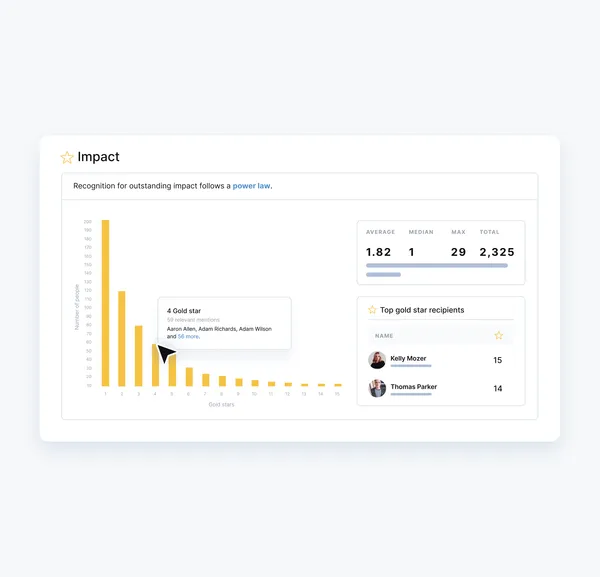
Reduce interview bias with data-driven assessment
Interview performance doesn't predict job performance—relationship-building ability, learning speed, and actual work output do. Replace gut feeling with structured indicators that reveal candidate potential regardless of background.
Move beyond resume screening
Resumes tell you where someone went to school and who employed them. They don't tell you learning ability, team fit, or influence. Use structured interviews that surface the real predictors of success.
Create consistent evaluation across all candidates
Same questions, same scoring, same success profile applied consistently. This eliminates interviewer bias and lets the best candidates rise to the top regardless of background.
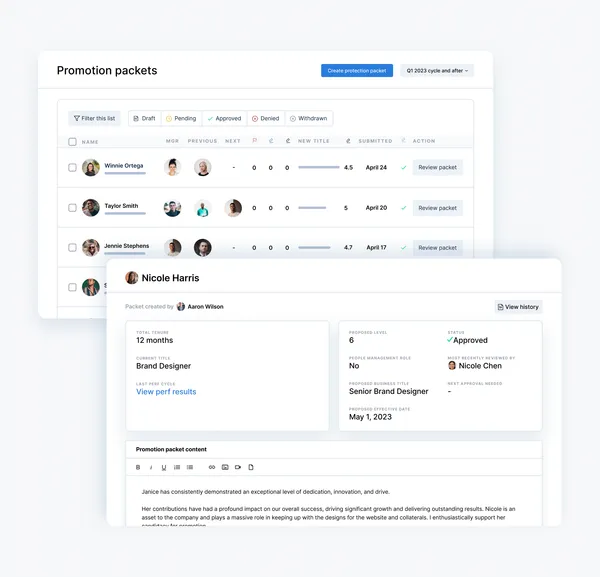
The Math Behind Predictive Hiring
Resumes and interviews don't predict performance
20-25% failure rate vs. 40-50% with traditional hiring
At $150K-200K cost per bad hire, preventing failures pays back 10x
For a company hiring 100 people annually, improving from 46% to 23% failure rate saves $2.3M-3.2M annually in avoided bad hire costs. Structured predictive hiring pays for itself immediately while improving team quality.
Build data-driven network fit prediction
Will this candidate integrate with your team and build productive relationships? ONA analysis of your current network shows you what healthy collaboration looks like. Identify candidates who build strong networks quickly and win trust across teams.
Predict team integration speed
Network analysis shows how your best people build relationships fast. Find candidates with similar relationship-building patterns—they'll integrate faster and become productive sooner.
Identify cross-functional influencers
Some people naturally build influence and collaboration across teams. Your ONA data shows what this looks like. Find candidates with strong network influence potential.
Track quality of hire and continuously improve hiring
Hiring predictions are only valuable if you measure outcomes. Track how well predicted high performers actually perform, identify gaps in your assessment process, and refine your predictive model over time.
Measure hiring accuracy
Track Month 3, Month 6, and Month 12 performance outcomes. Which predictive indicators correlated with success? Where did you miss? Your data tells you what to optimize for next time.
Build your hiring advantage
Over time, your predictive model gets better. You learn which questions surface the best signal, which interviewers are most accurate, what indicators matter most in your context. This becomes your competitive advantage.
The Four Predictive Indicators That Matter
After analyzing hundreds of hires, these four indicators consistently predict performance better than credentials or interviews:
How did they actually perform in similar roles? Consistent delivery over 12-24 months beats one brilliant project. Look for evidence of progression and sustained impact.
Can they build relationships and influence others? In remote and hybrid work, people who succeed aren't loudest—they're trusted. Ask about specific people they've influenced.
How quickly do they learn new domains and adapt to unfamiliar situations? Fast learners become productive in weeks. Slow learners take months. Ask about transitions and how they approach unfamiliar challenges.
Will they thrive in *your* environment with *your* manager? Good people fail in wrong environments. Be honest about your work style. Let candidates self-select based on real information.
Customer Story
See how companies reduce bad hires with predictive hiring
Explore the whole platform
Performance Reviews
Modern performance management powered by ONA and AI.
Learn more ›Engagement Surveys
Turn employee feedback into action, faster.
Learn more ›OKRs and Goals
Track OKRs and career goals in one place.
Learn more ›Talent Management
Make better talent decisions, without the bias.
Learn more ›Feedback and Growth
Empower continuous feedback and development.
Learn more ›See Confirm in action
See why forward-thinking enterprises use Confirm to make fairer, faster talent decisions and build high-performing teams.