
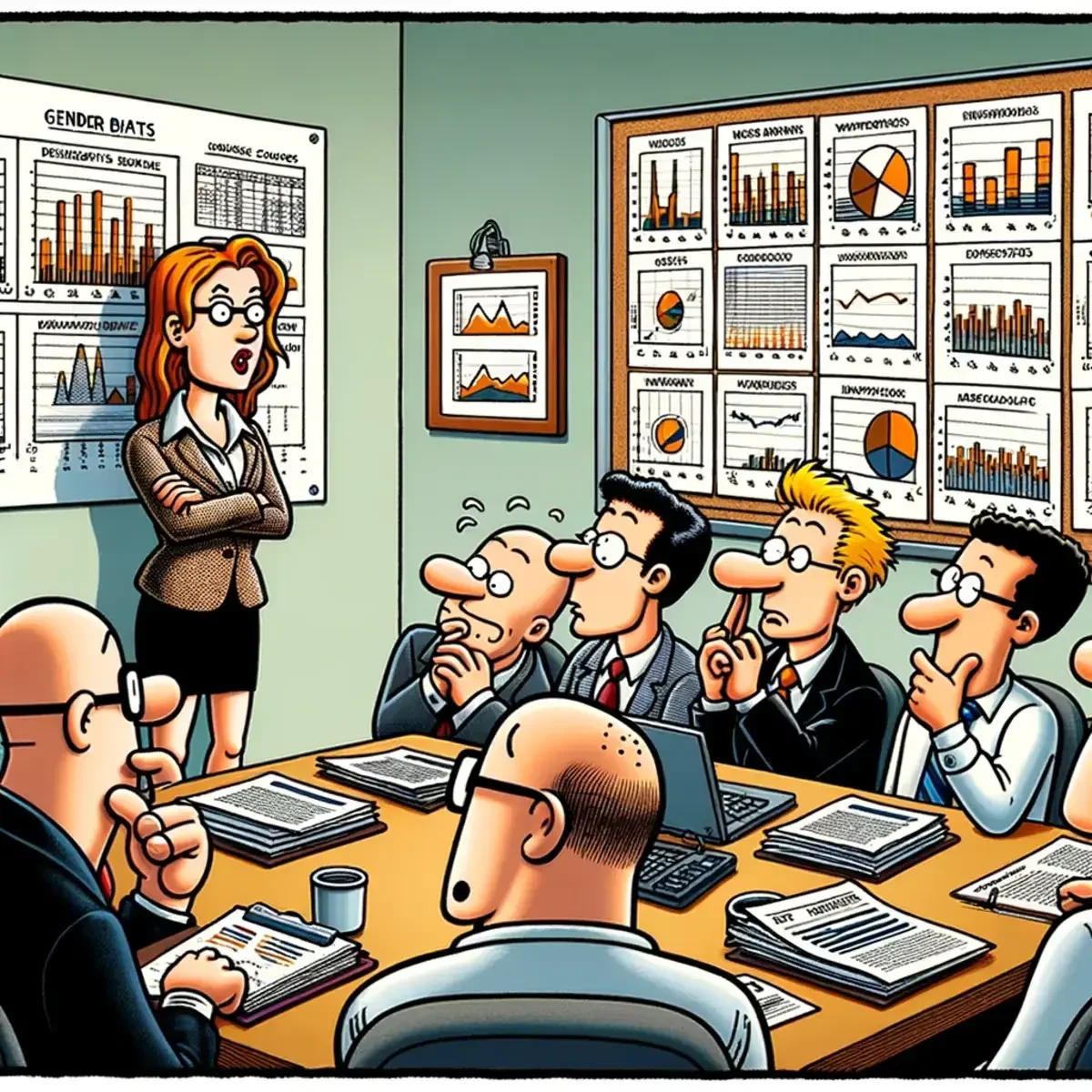
Employee performance reviews are intended to provide fair, objective assessments of work quality, contributions, and potential. However, ample research indicates that unconscious gender bias frequently seeps into reviews, negatively impacting scores and feedback given to women in the workplace. Women are more likely to receive vague criticism rather than constructive guidance and have their capabilities underestimated compared to male colleagues. See how Confirm handles performance reviews.
Organizational network analysis, which examines communication patterns and relationships between employees, is an emerging technique that can mitigate gender bias in reviews. By mapping how information flows within a company, network analysis provides tangible metrics for the impact of collaborative work. As more organizations adopt this approach, there is tremendous potential to promote equity and reduce the biases that hinder women from advancing.
What Is Organizational Network Analysis?
Organizational network analysis (ONA) involves examining informal networks and relationships between employees at a company. It identifies who interacts with whom, how frequently they interact, and the nature of those interactions. ONA is conducted through employee surveys that ask respondents to identify key contacts across the organization that they go to for help, advice, motivation, and energy, as well as who they believe are outstanding and below par performers.
Mapping out these connections with network analysis software illuminates how information, knowledge, and influence truly flow within an organization. It pinpoints which employees serve as key connectors and generators of ideas. ONA moves beyond just looking at the formal organizational chart to uncover the most critical bridges across teams, departments, and offices.
Four Ways Network Analysis Counteracts Gender Bias:
1. Quantifies collaborative and informal work: Traditional performance reviews often focus mostly on individual task execution, project work, and technical skills. However, organizational network analysis is able to capture a wider range of contributions - relationship building, information sharing, problem-solving, and interpersonal support that makes teams more effective. Women tend to excel at and devote time to these collaborative behaviors which empower the group. However, under conventional evaluation approaches, this work goes underappreciated and unmeasured. Using ONA provides data to quantify the value of informal leadership, mentorship, and overall connectivity.
2. Reduces affinity bias: People have natural affinity biases where they advocate for and give higher praise to those employees they interact with most frequently. Organizational network data helps reveal these biases by showing exactly who is really collaborating across the company rather than just self-reported perceptions of collaboration. This insight corrects biases like only championing the contributions of those within your own business unit or those employees who you see most often physically in the office.
3. Notes “unsung heroes”: ONA can be powerfully eye-opening in unveiling employees, often women, who do important work behind the scenes but go unrecognized. These people act as key knowledge brokers within internal networks. They disseminate information across silos, provide integral support infrastructure, and informally mentor colleagues to improve performance. But because this facilitative work is not part of formal job descriptions, it gets overlooked. Network analysis offers hard data to reveal these “unsung heroes” who make the organization run more smoothly.
4. Balances team and individual performance: Organizational network visualizations present a holistic view of how performance is enabled by team dynamics, information flow, and collaboration. This wide lens provides balance against reviews that simplistically look at just individual metrics in a vacuum. The interdependent nature of work is made clear. This perspective also favors women who tend to be motivated by organizational success over individual glory.
The applications of ONA are extensive. It provides concrete metrics to evaluate performance, job readiness, team cohesion, innovative potential, and much more. As adoption increases, organizational network analysis has immense potential to create more equitable workplaces where women can advance and lead.
Want to see how Confirm handles this? Request a demo — we'll walk you through the platform in 30 minutes.
If you're looking for calibration software to standardize ratings across your organization, see how Confirm approaches it.