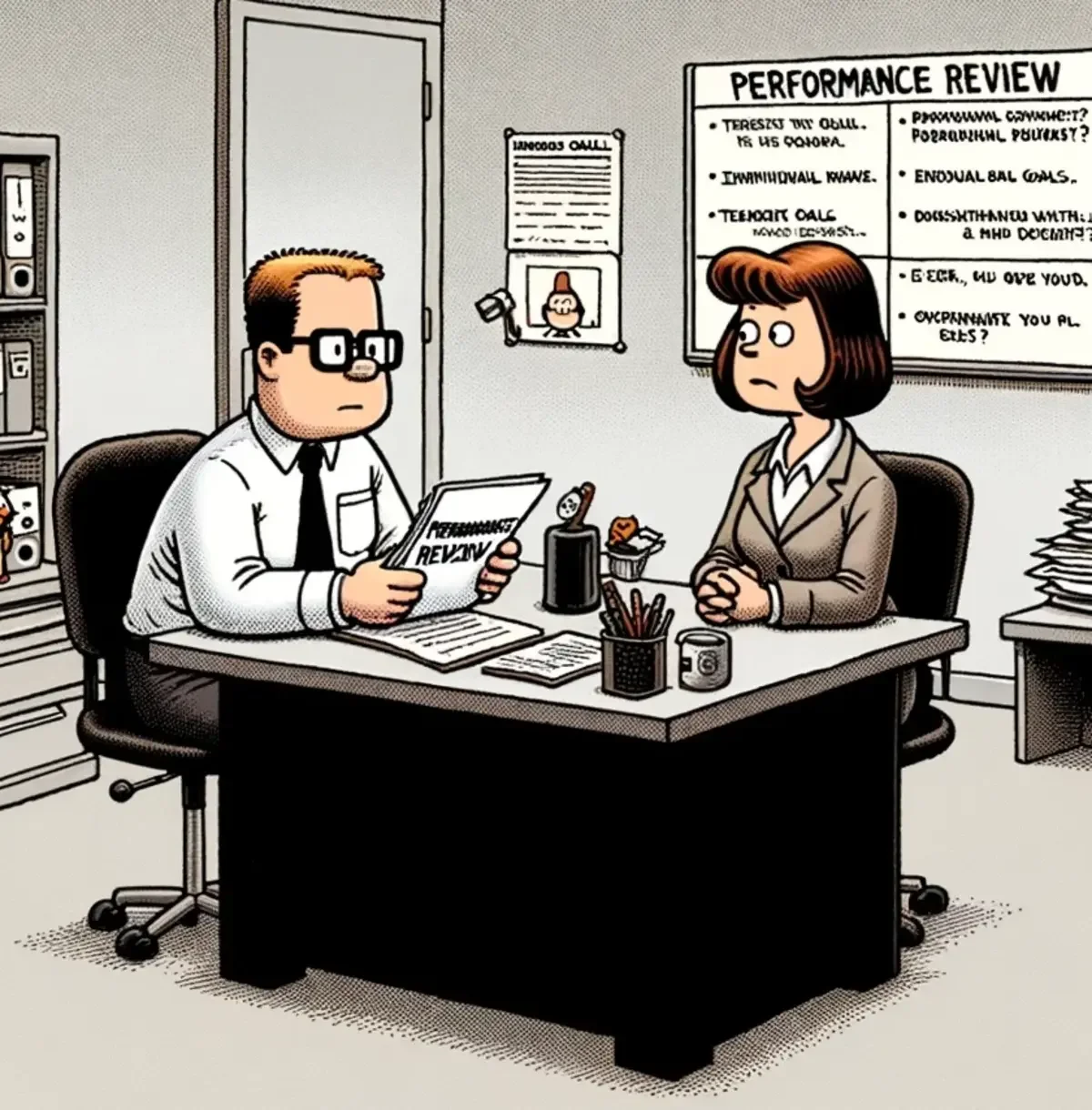
Nobody likes performance conversations. Annual review? Thumbs down. Mid-week feedback session? 0 stars, do not recommend. Performance conversations are uncomfortable for managers and employees. They're verbal minefields of stress! But these discussions can also produce great results for your organization. See how Confirm handles performance reviews.
Effective performance conversations create growth for employees, teams, and organizations. Read this guide and learn techniques to conduct effective, empathetic performance conversations.
The Importance of Good Performance Conversations
1. Individual Growth:
Performance conversations build roadmaps for individual growth. Constructive feedback helps them understand what they are good at and where they can improve. From there, they can map out a growth path to improve their skills and competencies.
2. Team Dynamics:
A great team relies on open communication and working together. Managers must address performance issues, including difficult bell curve context about underperformance in a direct and constructive manner. It sets clear expectations and standards for the entire team. This helps them do their best work.
3. Organizational Success:
Individuals and teams impact how well an organization performs.Coaching-based conversations ensure better fit with company mission and objectives. They build a culture of accountability, innovation, and continuous improvement. See our review conversation structure for the full conversation structure. They set your organization up for success. And that's all we want right? A workforce that is motivated and focused on growth knows what to do and where to go next.
Strategies for Navigating Difficult Conversations
1. Prepare Ahead of Time:
Before you have a challenging talk about someone's performance, make sure you're ready. Review specific examples from your records, including any PIP conversation or previous feedback. Gather relevant data, including 360-degree feedback if available. Write down expectations and standards. Preparing helps you deliver clear feedback that can be acted upon.
2. Choose the Right Setting:
Create a comfortable setting for the conversation. Choose a neutral space where both parties can speak without the fear of judgment. This sets the scene for a constructive, respectful discussion.
3. Focus on Behavior, Not Personality:
People can change behaviors. They can't change their personalities. Focus your feedback on specific behaviors instead of the individual's character. Pro-tip: Give specific examples and present feedback as a chance to make positive changes.
4. Active Listening:
Good communication goes both ways. Listen during the conversation. Allow the employee to share their perspective, concerns, and ideas for improvement. When someone speaks to you, show that you are listening by nodding and looking them in the eye. Managers that show empathy and willingness to collaborate are way ahead of the game.
5. Offer Constructive Feedback:
Don't focus solely on what went wrong. Provide constructive feedback on how to improve. Offer clear and actionable suggestions. Set realistic goals for the employee. Discuss the support and resources available for their success.
6. Collaborative Goal Setting:
Include the employee in setting goals. Encourage them to take ownership of their performance improvement plan. Help them set objectives that are achievable and measurable. These objectives should match both personal and organizational goals.
7. Follow Up and Support:
Performance improvement is an ongoing process. Schedule regular follow-up meetings with your employee. This helps you and the employee track progress, celebrate wins, and address challenges. Providing ongoing support demonstrates a commitment to the employee's success.
The Ripple Effect of Effective Performance Conversations
1. Employee Morale and Engagement:
Every manager wants their people engaged and motivated. This goal is impossible if employees don't understand their goals or expectations. Effective performance conversations reduce confusion and create shared purpose.
2. Team Productivity:
Addressing performance issues promptly is essential for uninterrupted team productivity. It allows the entire team to focus on their work. Team members need to know you hear their concerns. Only then will engagement, retention, and productivity will rise.
3. Organizational Culture:
Performance conversations shape the culture of an organization. This is your opportunity to communicate company values and expectations. A healthy culture enables your organization to attract and retain top talent. It sets the tone for a dynamic and forward-thinking workplace. But you can't do it without effective performance management conversations.
Managers must lead these discussions with empathy, preparation, and a focus on improvement. These discussions contribute to growth on the individual, team, and organizational level. So take the first step. Embrace the challenge and awkwardness of performance management! Treat it as an opportunity to raise everyone's game.
- Prepare specific examples: one documented incident beats ten impressions during the meeting.
- Open with curiosity: asking 'How do you think this quarter went?' reveals gaps in perception before you present yours.
- Be direct, not soft: vague feedback protects no one; it creates confusion and delays needed change.
- Separate coaching from evaluation: if you're giving a low rating, don't simultaneously offer excessive praise.
- End with written next steps: verbal agreements disappear; written plans hold both parties accountable.
- Follow up in 1:1s: a difficult conversation without follow-through is just a moment of discomfort with no lasting impact.
Frequently Asked Questions
Q: How do you have a difficult performance review conversation?
A: Follow the SBI model: describe the Situation, the specific Behavior, and its Impact. Prepare written examples before the conversation. Open with curiosity: ask the employee for their perspective first. Be direct about the gap without being personal. End with a clear, agreed-upon plan. Avoid 'sandwich feedback' (burying criticism between praise): it dilutes the message and leaves employees uncertain about what actually matters.
Q: How do you tell an employee their performance is not meeting expectations?
A: Be specific and direct: 'Your project delivery timelines have been 2–3 weeks late on the last three projects. Here are the examples.' Then ask: 'What's getting in the way?' Listen before problem-solving. Present expectations clearly: what 'meeting expectations' looks like going forward. Offer support. Document the conversation. Avoid vague phrases like 'just needs improvement': they leave employees confused about the severity of the issue.
Q: How do you handle an employee who gets defensive during a performance review?
A: Stay calm and don't mirror the emotion. Acknowledge their perspective: 'I hear that you see it differently. Help me understand your view.' Return to specific evidence: 'Here's what I observed on [date].' If the conversation becomes unproductive, suggest pausing and reconvening with HR present. The goal is shared understanding, not winning an argument. Defensive reactions often signal unclear expectations earlier in the cycle.
Q: How do you give negative feedback without destroying employee confidence?
A: Lead with genuine recognition of the employee's effort and specific strengths. Then present the performance gap as a development opportunity: 'I want to help you grow in this area because I see the potential.' Use forward-focused language: 'Here's what success looks like going forward.' Connect corrective feedback to the employee's own stated goals when possible. The feedback should feel like coaching, not evaluation.
Q: What should managers avoid saying in a performance review?
A: Avoid: 'You always/never...' (overgeneralization), 'I feel like you...' without evidence (subjective), 'Everyone thinks...' (vague attribution), 'Compared to other employees...' (inappropriate), 'This is just my opinion' (undermines your authority as manager), and vague praise like 'keep up the good work' without specifics. Every statement should be observable, specific, and tied to actual business impact.
Want to see how Confirm handles this? Request a demo — we'll walk you through the platform in 30 minutes.
If you're looking for calibration software to standardize ratings across your organization, see how Confirm approaches it.