
Amidst the animated interactions of a workplace, there exists a silent undercurrent, one where the steady introverts lay the groundwork. However, in the hum of the extroverted energy, the consistent contributions of introverts might get overshadowed. Is there a way to recognize and reward every input, irrespective of its volume? With Organizational Network Analysis (ONA), we believe there is. See how Confirm handles performance reviews.
Embarking on a Data-driven Exploration
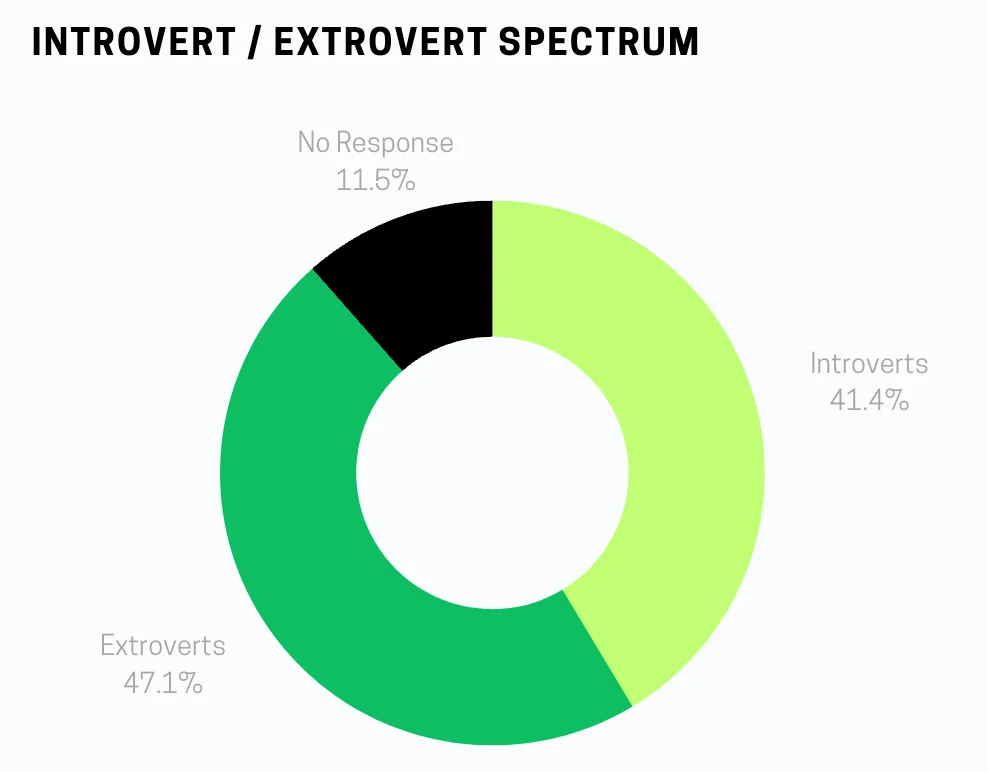
We started with a user-friendly survey capturing responses from 94.5% of the participants at an organization of knowledge workers, asking them to self-identify where they stood on the introvert-extrovert spectrum.
While 41.4% identified as extroverts, a slightly larger 47.1% classified themselves as introverts. This nearly even split set the stage for a deeper dive into the dynamics between these groups.
The Essence of Energy: What the Numbers Revealed
Our analysis hinged on understanding two key interactions: whom employees approached for help or advice and who energized or motivated them at work. The outcomes were intriguing:
- Notably, the energy dynamics were statistically significant, especially when considering the Fisher's Exact Test results, which delivered a compelling p-value of 0.01549.
- Neutral individuals, not firmly in the introvert or extrovert camp, were observed to gravitate towards both ends of the spectrum when seeking advice or a motivational boost.
This isn't just data for the sake of data; it reveals a clear picture. Introverts, often tucked away in the backdrop, emerge as fundamental catalysts in shaping team dynamics, nurturing motivation, and offering real data.
ONA vs. Traditional Methods: Why ONA Wins
Traditional performance assessments, such as cherry-picked 360s or manager reviews, might inadvertently miss the mark, especially when it comes to recognizing these 'quiet contributors'. Here's where ONA transforms the narrative:
1. Spotlighting Silent Stalwarts: Unlike traditional reviews, which rely on subjective selections, ONA is holistic. It unravels the threads of workplace dynamics, revealing how team members, even the introverted ones, are essential go-tos for advice or motivation.
2. Democratizing Recognition: With ONA, the necessity to continually "self-promote" diminishes. Each member stands recognized for their genuine impact and not merely their presentation prowess, moving past the limitations of 360s where feedback might be influenced by close alliances.
3. Championing Diverse Voices: While extroverts naturally command attention, introverts supply depth and introspection. Unlike manager reviews, which might suffer from individual biases or blind spots, ONA ensures every shade of contribution is celebrated without prejudice.
To Conclude
Performance evaluation should transcend vocal prowess or meeting visibility. True assessment lies in discerning real contributions and ripple effects. With its evidence-based approach, ONA works as the best tool for this, ensuring even the softest voices resonate with the acknowledgment they rightly deserve, unhindered by the pitfalls of traditional evaluation methods.
Want to see how Confirm handles this? Request a demo — we'll walk you through the platform in 30 minutes.
If you're looking for calibration software to standardize ratings across your organization, see how Confirm approaches it.