
Workforce planning tools that see how work actually flows, not just headcount
Stop planning based on org charts and spreadsheets. Confirm's workforce planning tools use Organizational Network Analysis to reveal collaboration patterns, critical dependencies, and succession risks before they impact your business.
Workforce Planning Tools
Your workforce plan says you need 5 engineers. It doesn't say you're about to lose your only network architect.
Every workforce planning exercise follows the same pattern: HR pulls headcount reports, compares current state to growth targets, identifies gaps by department, and builds a hiring plan. Finance approves the budget. Executives sign off. Everyone feels confident.
Then reality hits. A senior engineer quits and three projects stall because she was the only person who understood the infrastructure. A product manager leaves and cross-functional collaboration falls apart because he was the connector between engineering, design, and sales. A reorg that looked clean on paper destroys informal networks that made the company actually function.
Traditional workforce planning tools see headcount. They don't see organizational structure, collaboration networks, or critical dependencies. They tell you how many people you have. They don't tell you how work flows, who enables others, or where you have single points of failure.
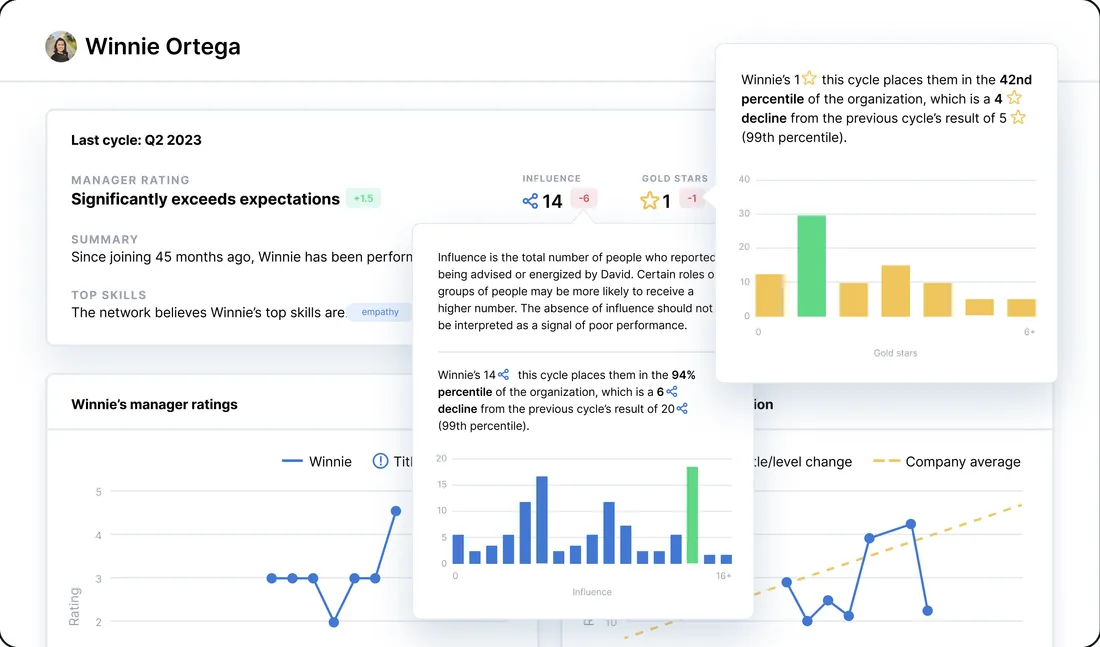
Confirm's workforce planning tools add network intelligence. Our Organizational Network Analysis reveals which employees are collaboration hubs, where bottlenecks constrain capacity, which skills are concentrated in too few people, and how reorgs will affect actual work patterns, not just reporting lines.
CHROs at Canada Goose · Trillium Flow · Thoropass · Ardurra trust Confirm
Workforce Planning Tools Comparison
| Capability | Confirm (ONA + Planning) | HRIS Planning (Workday, ADP) | Specialized Tools (Visier, OneModel) |
|---|---|---|---|
| Data foundation | Headcount + network collaboration | Headcount and org chart only | Headcount and HR metrics |
| Critical talent identification | Network dependency analysis | Not available | Performance ratings only |
| Succession risk detection | Identifies single points of failure | Manual successor nomination | Based on tenure and role level |
| Collaboration bottlenecks | Maps network constraints on capacity | Not measured | Not measured |
| Reorg impact modeling | Shows which networks will break | Org chart visualization only | Reporting line changes |
| Skills gap analysis | Network-based: who can do work vs. who does it | Self-reported skills inventory | Skills database matching |
| Capacity planning | Accounts for collaboration overhead | Headcount ratios | FTE calculations |
| Implementation time | 2 weeks to first insights | Included with HRIS | 8-12 weeks setup |
Critical Talent Dependency Mapping
Identifies employees whose departure would disrupt multiple teams or projects through network centrality analysis, collaboration patterns, and knowledge uniqueness metrics.
Succession Risk Analysis
Reveals single points of failure in your organization: roles with no backup, skills concentrated in one person, or critical connectors between teams with no succession plan.
Collaboration Bottleneck Detection
Shows where organizational structure constrains capacity: teams waiting on specific individuals, managers who are collaboration hubs for too many people, or departments with insufficient cross-functional connections.
Organizational Design Scenario Modeling
Model reorg scenarios before implementing them: see which collaboration networks will be affected, which cross-functional workflows will break, and where new dependencies will form.
Skills Gap & Capacity Analysis
Compare skills needed vs. skills available using network data, showing who actually does the work vs. who holds the skills on paper and where capacity is constrained by collaboration overhead.
Headcount Planning with Network Context
Make hiring decisions informed by organizational structure: where new hires will integrate fastest, which roles need backfill urgently, and how team size affects collaboration efficiency.
Plan your workforce based on how work actually flows
See why forward-thinking enterprises use Confirm to make fairer, faster talent decisions and build high-performing teams.




Workforce Planning Tools FAQ
What are workforce planning tools?
Workforce planning tools help organizations forecast talent needs, identify capability gaps, and plan hiring, development, and organizational structure changes. Traditional workforce planning tools focus on headcount numbers and skills inventories. Confirm's workforce planning tools add Organizational Network Analysis, revealing how work actually flows, where collaboration bottlenecks exist, which employees are critical single points of failure, and where your organizational structure creates inefficiency. You make workforce planning decisions based on how your organization actually operates, not just headcount and org charts.
How does Organizational Network Analysis improve workforce planning?
ONA reveals the invisible structure of your organization: who actually collaborates with whom, which teams depend on specific individuals, where knowledge silos exist, and how work flows across departments. Traditional workforce planning assumes the org chart reflects reality, it rarely does. A manager with 8 direct reports might actually work closely with only 3, while supporting 12 people across other teams. An individual contributor might be the critical connection between engineering and product. ONA shows you these patterns, helping you plan workforce changes (hiring, reorgs, departures) without accidentally damaging key collaboration networks.
Can Confirm identify succession risks in our workforce plan?
Yes. Confirm identifies critical talent dependencies, employees whose departure would disrupt multiple teams, projects, or workflows. We measure this through network centrality (how many people depend on them), knowledge uniqueness (skills few others have), and collaboration criticality (connections that would break if they left). When you're planning a reorganization, expansion, or managing unexpected departures, you see exactly which roles need immediate backfill, which employees need succession development, and where cross-training is urgent.
How does Confirm help with organizational design and restructuring?
When planning a reorg, Confirm shows you the actual collaboration patterns that will be affected. You can model scenarios: if you move this team under a different leader, which collaboration networks break? If you eliminate this management layer, who loses critical connections? If you split engineering into two departments, which cross-functional workflows are disrupted? This prevents the common reorg failure mode where leadership redesigns the org chart based on theory, only to discover they've destroyed the informal networks that made the company function.
Does Confirm integrate with our existing workforce planning process?
Yes. Most companies use spreadsheets, HRIS reports, or dedicated workforce planning software for headcount forecasting and budgeting. Confirm adds network-based context to those decisions. You can export ONA data, critical talent lists, and succession risk reports to include in your workforce planning reviews. Many customers use Confirm alongside tools like Workday HCM, OneModel, or Visier, using those systems for headcount/financial planning and Confirm for organizational structure, succession, and capacity risk analysis.
What's the ROI of using Confirm for workforce planning?
Confirm's workforce planning tools help teams surface hidden dependencies, identify retention risks before they become problems, and make more objective succession decisions using ONA data rather than manager nominations alone. Calculate your specific ROI at confirm.com/tools/roi-calculator.
Explore the whole platform
Performance Reviews
Modern performance management powered by ONA and AI.
Explore this feature ›Engagement Surveys
Turn employee feedback into action, faster.
Explore this feature ›OKRs and Goals
Track OKRs and career goals in one place.
Explore this feature ›Talent Management
Make better talent decisions, without the bias.
Explore this feature ›Feedback and Growth
Empower continuous feedback and development.
Explore this feature ›