The 12 best workforce enablement systems & platforms in 2026
24 min read

Choosing a workforce enablement system should be simple. It rarely is.
Search the market and you’ll find learning systems, employee experience platforms, performance tools, frontline apps, and human resources (HR) suites. The language often sounds similar. The products can be very different.
That makes comparing them difficult. One system offers extensive learning capabilities but little visibility into employee engagement. Another is strong on performance management but requires a separate learning management system (LMS). Others bring several areas together but are designed specifically for either frontline or desk-based teams.
The 12 systems below approach workforce enablement from different angles. Each profile covers what the system does, its strengths and limitations, how pricing works, and who it suits best.
Read on to discover:
- What is a workforce enablement system?
- How is a workforce enablement system different from an LMS, LXP, engagement platform, or performance platform?
- Why do you need a workforce enablement system?
- The benefits of workforce enablement systems
- Different approaches to workforce enablement
- AI in workforce enablement systems
- What to look for in workforce enablement systems
- How to evaluate workforce enablement systems
- 12 workforce enablement systems to consider in 2026
- How to choose the right workforce enablement system
What is a workforce enablement system?
A workforce enablement system (WES) is the technology that makes people capable, ready, and effective at work after they’re hired. It connects learning, engagement, and performance in one place, supported by content and artificial intelligence (AI), so you can equip people, listen for where they struggle, act with clear next steps, and measure whether any of it is working.
That gives the business clearer insight into capability and performance. It can also help reduce operating costs and risk.
A WES works alongside the other systems in your HR tech stack. Your applicant tracking system (ATS) helps you hire people, and your human capital management (HCM) or human resources information system (HRIS) administers them. A WES complements both by focusing on what happens once people are in the business. It does not replace them.
The important distinction is that workforce enablement looks beyond training completion alone.
Learning shows what people know. Engagement shows what’s getting in the way. Performance shows whether any of it is making a difference. Confirm calls the loop between them the Talent Flywheel.
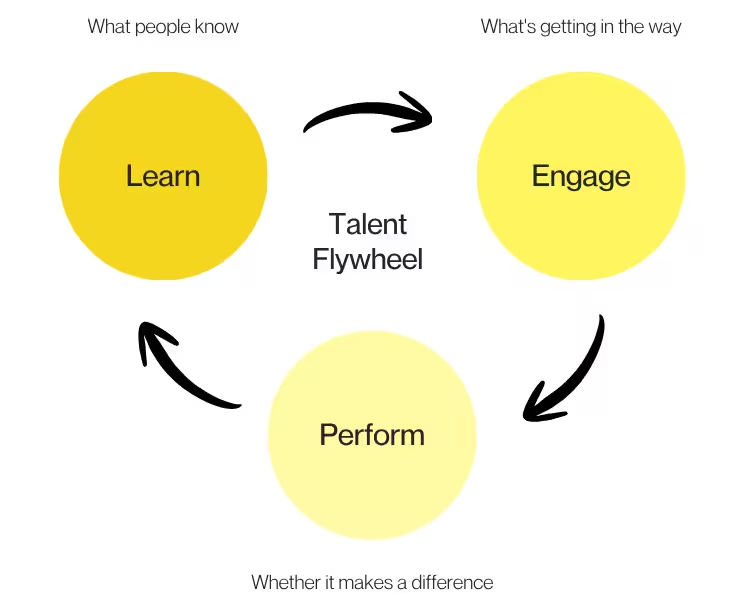
The Talent Flywheel always runs Learn, then Engage, then Perform.
When these signals sit in separate systems, it becomes harder to connect the dots.
A performance conversation might identify a development need that never shapes somebody’s learning. A drop in engagement might sit inside a survey dashboard without being connected to performance. An employee might complete every required course without anyone knowing whether they can confidently apply what they learned.
For a broader look at what workforce enablement means in practice, explore our complete guide to workforce enablement.
How is a workforce enablement system different from an LMS, LXP, engagement platform, or performance platform?
Workforce enablement overlaps with many established learning and HR technologies, such as learning experience platforms (LXPs). The difference between them becomes clearer when you look at what happens after each system does its job.
Some leave you with a “so what?” problem – you know learning happened, but not whether it changed performance. Others create a “now what?” problem – they surface an issue, but do not help you act on it. A WES is designed to connect those signals and close the loop.
| System | Primary focus | Typical capabilities | Limitations |
|---|---|---|---|
| LMS | Delivering and managing learning | Courses, assessments, compliance, certifications, completion tracking | A “so what?” problem. Limited employee listening and performance management |
| LXP | Learning discovery and development | Personalized learning, curated content, pathways, social learning | A “so what?” problem. Less depth in compliance, performance, and engagement |
| Employee engagement platform | Understanding employee experience | Surveys, listening, sentiment, recognition, retention insights | A “now what?” problem. Limited structured learning and performance management |
| Performance management system | Managing performance and development | Goals, reviews, feedback, calibration, coaching | A “now what?” problem. Limited learning delivery, compliance, and broader engagement insight |
| Workforce enablement system | Connecting capability, engagement, and performance | Learning, engagement, performance, skills, and workforce readiness | May offer less specialist depth in individual areas |
Capabilities increasingly overlap, so these distinctions aren’t absolute. The main difference is usually where each system goes deepest and how well its capabilities connect.
It doesn’t necessarily mean replacing every specialist system you already have. Some organizations will still need deep specialist functionality. But it changes the buying question.

Ask any vendor, including us, one question: what happens in your system after someone finishes a course, after an engagement score dips, or after a review flags a gap? If the answer only covers one signal, you’re looking at a point solution.
Why do you need a workforce enablement system?
Most organizations do not need more HR technology. The problem is often too much technology with too little connection between it.
Our 2026 benchmarking research (400 frontline enterprises and 400 scale-ups, UK and US) shows what that fragmentation can look like operationally.
On the frontline, 76% of surveyed organizations said employees not being fully job-ready across locations created high operational risk.
The same research found that 72% said new frontline employees took more than four weeks to reach full productivity.
Having enablement initiatives is one thing. Making them work consistently is another. 98% said their current performance management and engagement initiatives improve frontline performance effectively. But only 46% said they do so very effectively.
Frontline
76%
say employees not being fully job-ready across locations creates high operational risk.
72%
say new frontline employees take more than four weeks to reach full productivity.
46%
say performance management initiatives improve frontline performance very effectively.
For fast-growing companies, the pressure appears differently.
The research found that 93% of respondents said organizational growth was outpacing employee enablement, while 87% said employees were not fully equipped to perform their roles effectively as their organization scaled.
And nearly half said new hires took two to three months to reach full productivity.
Scale-up
93%
say organizational growth is outpacing employee enablement significantly or moderately.
87%
say employees are not fully equipped to perform their roles effectively as the organization scales.
49%
say newly hired employees take two to three months to reach full productivity in their roles.
Source: The Frontline Enablement Gap and The Scale-Up Enablement Gap, Confirm benchmarking research, 2026.
The practical question, then, is whether those activities help employees become ready, stay supported, and perform consistently as the organization changes.
That is the gap a workforce enablement system should help close.
Want to understand where your biggest workforce readiness gaps are?
Explore our latest benchmarking report.

The benefits of workforce enablement systems
A workforce enablement system should do more than bring a mix of HR or learning features into one place. The value is in spotting where people need help and acting sooner.
Depending on the system and the workforce, that can include:
- Faster onboarding by giving employees clearer learning and support from day one.
- Better workforce readiness visibility by showing where skills, knowledge, compliance, or performance gaps are developing, and by bringing relevant workforce signals closer to managers.
- More connected employee data by reducing the separation between learning, engagement, and performance information.
- Earlier intervention by helping managers identify where employees need support before problems escalate.
- Greater consistency across roles, teams, sites, and locations, with stronger compliance visibility through clearer certification, recertification, and reporting.
The benefits that matter most will depend on the problem you are trying to solve. That is why feature depth and workforce fit matter more than the length of a vendor’s feature list.
Different approaches to workforce enablement
Workforce enablement can be approached from different starting points. Some systems genuinely connect learning, engagement, and performance. Others go deeper in one or two of those areas and extend into adjacent capabilities such as skills, communications, or frontline operations.
That distinction matters. Not every system in this guide would meet the same definition of a full workforce enablement system, but each can play a role in solving workforce enablement problems.
- Connected workforce enablement systems – bring learning, engagement, and performance together, with workforce data linking the three.
- Frontline enablement systems – combine learning with communications, knowledge, tasks, or operational support for deskless and distributed teams.
- People and performance systems – focus on employee listening, goals, reviews, development, and manager effectiveness, with less emphasis on structured learning.
- Learning-led workforce systems – start with learning, skills, and capability development, then extend into areas such as performance, knowledge, or employee support.
Matching a workforce enablement system to your workforce
What matters most changes depending on how your people work. A system supporting 5,000 employees across hundreds of retail locations has very different demands from one supporting a 300-person software company.
Think about size, location, access to technology, compliance, and manager structure. Then look at how quickly roles and skills change. Those factors will shape which capabilities matter most.
Frontline and distributed workforces
Retail, hospitality, manufacturing, and logistics bring different practical requirements. A system designed for desk-based employees often won’t handle them well.
Multi-site workforces may need mobile or shared-device access, multiple languages, and location-based assignments. Learning needs to fit around the working day.
You may also need enablement to extend beyond learning.
Knowing how to complete a task is not always enough. Employees also need to find the latest procedure and show the task was completed correctly.
Scale-ups and knowledge workforces
Fast-growing businesses generally face a different set of pressures.
Informal onboarding stops scaling. Practices become inconsistent. Employees need clearer career paths. Goals, feedback, learning, engagement, and performance data start spreading across separate tools.
Priorities shift here. Faster onboarding, manager coaching, skills visibility, and connected goals and performance may all matter.
An enablement model that worked at 100 employees can start to break as headcount and complexity grow.
Start with how your workforce works, not the product label. A system that suits 300 desk-based employees may be completely wrong for 5,000 people working across sites and shifts.
AI in workforce enablement systems
AI now appears across almost every type of workforce enablement system.
AI is being used across the workforce. It can create learning content, analyze feedback, coach managers, and surface risks or skills gaps.
But more AI features do not automatically make a system more useful. What matters is what that AI can connect to and act on.
Our scale-up research illustrates the difference.
Every organization surveyed reported using AI or technology-driven enablement tools to support workforce performance at scale. Yet only 42% said those tools were being used very effectively.
That suggests the bigger challenge is moving from AI adoption to AI integration.
When evaluating AI in a workforce enablement system, ask what it connects to.
- Can it use performance information to recommend development?
- Can it spot patterns in employee feedback?
- Can frontline employees get an answer on the job?
- Can managers take meaningful action based on the people and performance data already in the system?
You also need to understand the boundaries. Ask what information AI can access and how it generates recommendations. Check what AI can control and where human review still matters.
AI should shorten the distance between insight and action. If it simply adds another chatbot to a fragmented workforce stack, it hasn’t solved the underlying problem.solution.
What to look for in workforce enablement systems
Feature lists get long quickly. Start with the capabilities that tell you whether a system can improve workforce readiness in practice.
Learning depth
Look beyond whether a learning module exists. Check whether it supports:
- Onboarding and structured pathways
- Compliance and recertification
- Skills development and assessments
- Different content formats
- Mobile or frontline access
Engagement signal quality
“Engagement” can mean very different things. Check whether the system captures:
- Employee surveys and feedback
- Sentiment and listening signals
- Recognition and participation
- Retention or workforce risk indicators
- Insights managers can act on
Performance visibility
Look at how the system shows whether employees are progressing or need support. Check for:
- Goals and performance reviews
- Feedback and coaching
- Development planning
- Skills or competency visibility
- Readiness or performance insights
Connection between signals
Connected signals should lead to better decisions and clearer action. Look at whether the system can:
- Connect performance gaps to development
- Use engagement data alongside performance
- Link learning to skills or workforce readiness
- Give managers a joined-up view
- Turn workforce insight into clear actions
Having the features isn’t enough. The real test is whether those signals can inform each other without managers piecing the story together themselves.
Deployment complexity
More functionality doesn’t automatically mean it will be easier to introduce and manage the system. Check for:
- Integrations and identity management
- Content and data migration
- Implementation support
- Administration requirements
- Mobile or multi-site deployment
Compliance and reporting
For regulated and frontline environments, reporting deserves particular attention. Does the system support:
- Certifications and recertification
- Audit trails and evidence
- Role and location-based reporting
- Permissions and governance
- Clear visibility of compliance gaps
How to evaluate workforce enablement systems
To build this comparison, we reviewed publicly available product, feature, packaging, and pricing information from each vendor. Each profile covers the same questions, which helped us see where each system goes deepest, where gaps remain, and which workforces it appears best suited to. You can use the same eight areas to evaluate your own shortlist.
- Learning: How deeply does the system support learning, onboarding, skills, and capability?
- Engagement: What employee engagement or experience signals does it capture?
- Performance: How does it show performance, readiness, execution, goals, or development?
- Connection: How closely are those signals linked inside the same system?
- Workforce fit: Is the system designed primarily around frontline, scale-up, knowledge worker, or mixed environments?
- Compliance and reporting: How much support is available for governance, certification, auditability, and workforce visibility?
- AI maturity: Is AI embedded in useful workflows and connected to relevant workforce data?
- Deployment and pricing: How complex is the likely deployment, and how transparent is the commercial model?
No system is equally strong against every criterion, so matching the system to the requirement matters.
12 workforce enablement systems to consider in 2026
We selected these systems for their relevance to workforce enablement. Together, they show different approaches to learning, engagement, performance, and workforce readiness. The right fit will depend on your workforce, priorities, and the gaps you need to solve. Confirm is our own system, so we have listed it first. Pricing reflects publicly available information.
| System | Type of solution | Primary focus | Best fit | Pricing |
|---|---|---|---|---|
| Confirm | Connected workforce enablement system | Connecting learning, engagement, and performance | Frontline organizations and scale-ups | Pricing varies based on frontline and scale-up, and selected modules |
| Axonify | Frontline enablement | Learning, readiness, communications, and frontline execution | Large frontline and distributed workforces | Custom pricing based on team size, locations, and required features |
| Culture Amp | People and performance | Employee listening, performance, and development | Knowledge-work organizations focused on engagement and performance | Custom annual pricing based on employee count, products, and service tier |
| Lattice | People and performance | Performance, engagement, goals, and development | Scale-ups and mid-market knowledge workforces | Foundations $13/seat/month; individual products and add-ons also available |
| Learningbank | Learning-led | Onboarding, skills, compliance, and frontline readiness | Frontline and distributed workforces | Custom pricing based on workforce size, setup, and rollout |
| Leapsome | People and performance | Performance, engagement, learning, goals, and people data | Scale-ups and knowledge workforces | Flexible pricing from $3/user/month; final price depends on employee count, modules, and contract length |
| Mitti | Frontline enablement | Training, communications, tasks, inspections, and operational performance | Frontline, distributed, and multi-site organizations connecting capability with day-to-day operations | Free up to 10 users; Premium $24/seat/month annually or $29 monthly; Enterprise custom |
| 360Learning | Learning-led | Collaborative learning, skills, AI authoring, and frontline coaching | Organizations scaling internal expertise, skills, and frontline learning across distributed teams | Team Plan $8/user/month for up to 100 users; Business and Enterprise custom |
| Schoox | Learning-led | Frontline learning, skills, engagement, and business impact | Frontline and multi-site enterprises with complex learning and skills requirements | Custom annual subscription based on active learner count and platform tier |
| Thrive | Learning-led | Learning, skills, knowledge, and business performance | Organizations looking to modernize learning and capability development | Public pricing calculator based on learner count |
| WorkJam | Frontline enablement | Learning, communications, tasks, scheduling, and frontline execution | Large frontline and multi-site workforces | Essential from $799/month; Operations Elite from $1,599/month; learning is available as a paid add-on |
| YOOBIC | Frontline enablement | Learning, communications, tasks, and multi-site execution | Retail and distributed frontline teams | Custom pricing based on users or locations and selected modules |
1. Confirm
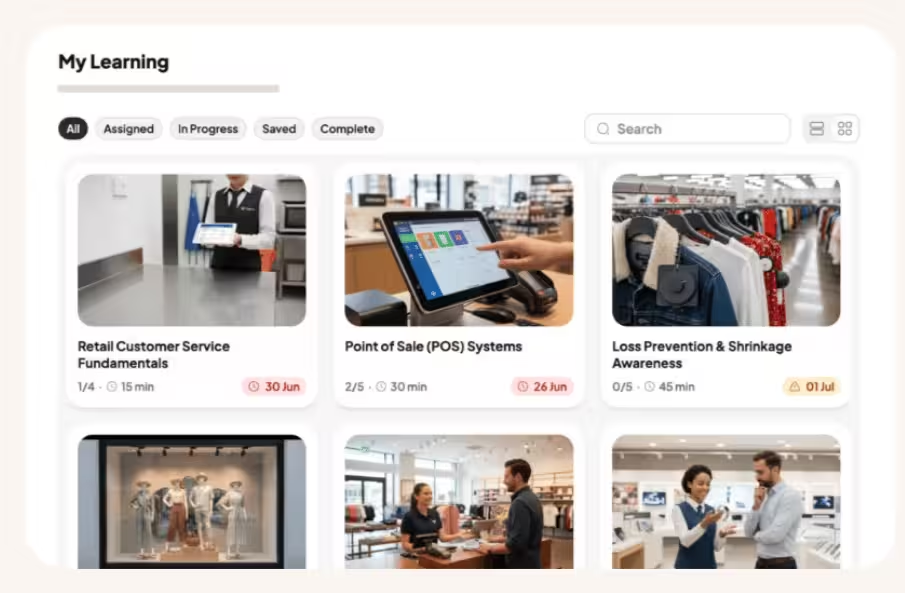
Confirm brings learning, engagement, and performance together within one workforce enablement system, with distinct products for frontline organizations and scale-ups.
Learning: For frontline organizations, Learn:Go supports mobile learning, role and location-based onboarding, compliance, recertification, and reporting.
For scale-ups, Learn:Up provides structured learning, skills, personalization, and analytics. Create, Library, and Custom add authoring, ready-made content, and tailored programs. Practice adds AI-powered simulations so employees can rehearse workplace conversations and receive feedback.
Engagement: For frontline organizations, Engage provides employee listening through surveys, sentiment, retention signals, and manager actions. For scale-ups, engagement signals are incorporated into Perform through pulse surveys and workforce insight.
Performance: Perform supports performance management across frontline and scale-up workforces, including reviews, calibration, manager guidance, and performance insight.
How it connects: For frontline teams, Learn:Go, Engage, and Perform connect capability, employee signals, and performance. For scale-ups, Learn:Up and Perform connect development with workforce insight. Practice adds applied skills development.

Strengths
Direct connection between learning, engagement, and performance, with distinct approaches for frontline organizations and scale-ups.
Weaknesses
Its broad product range means buyers need to identify which products they actually need rather than assuming the full suite is required.

Best for
Frontline enterprises and fast-growing organizations where learning, engagement, and performance are fragmented.

Pricing
Frontline: Learn:Go from $16/user/year; Perform from $13/user/year. Based on a 5,000-person company. Scale-up pricing is available on request.
2. Axonify
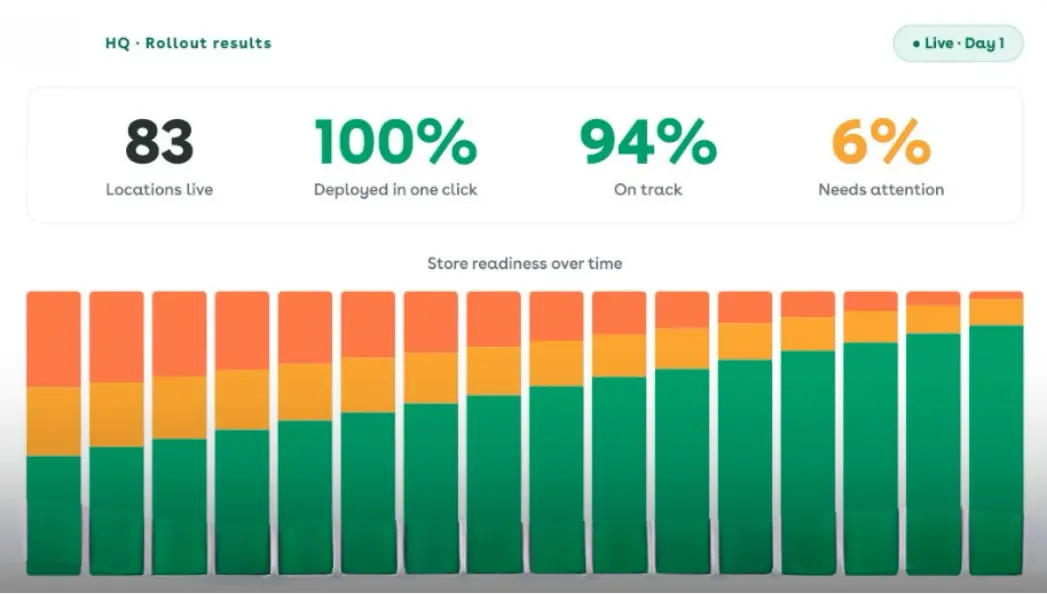
Axonify is built around the needs of frontline teams, combining learning, communications, readiness insight, and operational execution.
Learning: Learning is one of Axonify’s strongest areas. It combines personalized microlearning, reinforcement, training paths, certifications, and AI-supported content creation.
Engagement: Axonify uses broadcasts, polls, recognition, rewards, and social features to keep frontline teams connected. It focuses more on participation and communication than formal employee listening.
Performance: Axonify focuses on workforce readiness and operational performance. Knowledge, confidence, observations, and execution data help managers identify gaps, while higher packages add coaching and task management.
How it connects: Learning sits close to day-to-day work. Training, communications, manager insight, and operational tasks all sit within the same frontline experience.
Strengths
Deep frontline specialization, strong learning and reinforcement, communications, readiness insight, and operational execution.
Weaknesses
Less depth in formal employee listening, traditional performance reviews, and broader talent management.
Best for
Large frontline and distributed workforces where learning needs to translate into consistent execution.
Pricing
Core, Pro, and Premium packages. Pricing is based on workforce size, locations, and required features and is available by quote.
3. Culture Amp
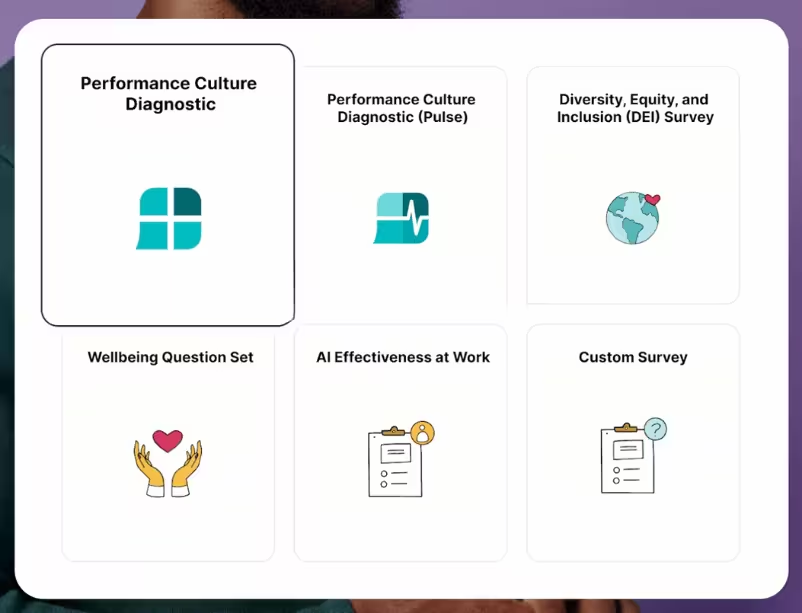
Culture Amp is strongest in employee listening, performance, and development.
Learning: Development capabilities include career paths, competencies, development plans, and manager coaching. It is designed primarily for development rather than as a full LMS for structured course delivery, compliance, or certification.
Engagement: This is a core strength. Culture Amp supports engagement and pulse surveys, sentiment, retention insights, benchmarking, lifecycle feedback, and action planning.
Performance: Its performance product covers performance reviews, calibration, goals, feedback, development planning, and manager support.
How it connects: Engagement, performance, and development sit in the same environment. That helps managers use workforce feedback and performance insight to guide action and development.
Strengths
Deep employee listening, performance management, benchmarking, manager support, and development.
Weaknesses
We found no dedicated structured learning, compliance, certification, or LMS administration product in its public materials.
Best for
Mid-sized and enterprise knowledge-work organizations focused on engagement, performance, and manager effectiveness.
Pricing
Custom annual pricing based on employee count, products selected, and service tier.
4. Lattice
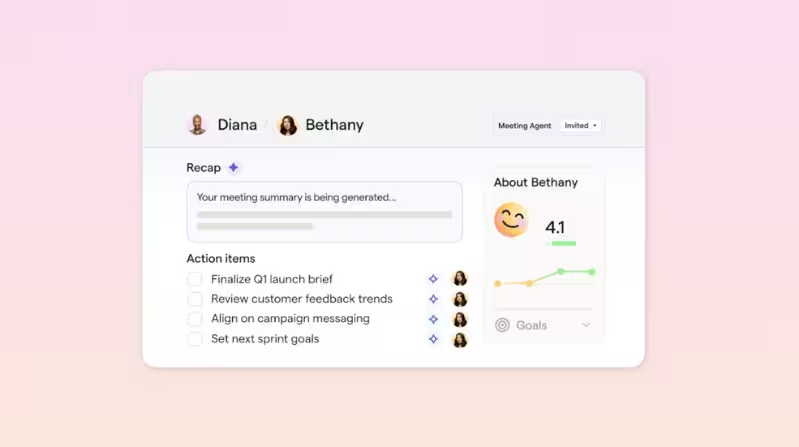
Lattice focuses workforce enablement around performance, engagement, goals, and employee development.
Learning: The Grow module supports competencies, career paths, individual development plans, and growth areas. It emphasizes career development rather than structured learning delivery.
Engagement: Lattice supports engagement and pulse surveys, employee feedback, recognition, and workforce analytics.
Performance: Performance is central to the system, with reviews, calibration, feedback, 1:1s, talent reviews, succession, performance improvement plans, and goals.
How it connects: Performance, engagement, goals, analytics, and development sit in the same talent environment. That gives managers a broader view of how people are performing and where they may need support.
Strengths
Strong performance management, engagement, goals, manager tools, and career development.
Weaknesses
We found no dedicated structured learning, compliance training, or certification product in its public materials.
Best for
Scale-ups and mid-market knowledge-work organizations focused on performance, engagement, and development.
Pricing
Foundations from $13/seat/month. Performance and Goals & OKRs (objectives and key results) are also available separately, with additional modules for areas such as growth and compensation.
5. Learningbank
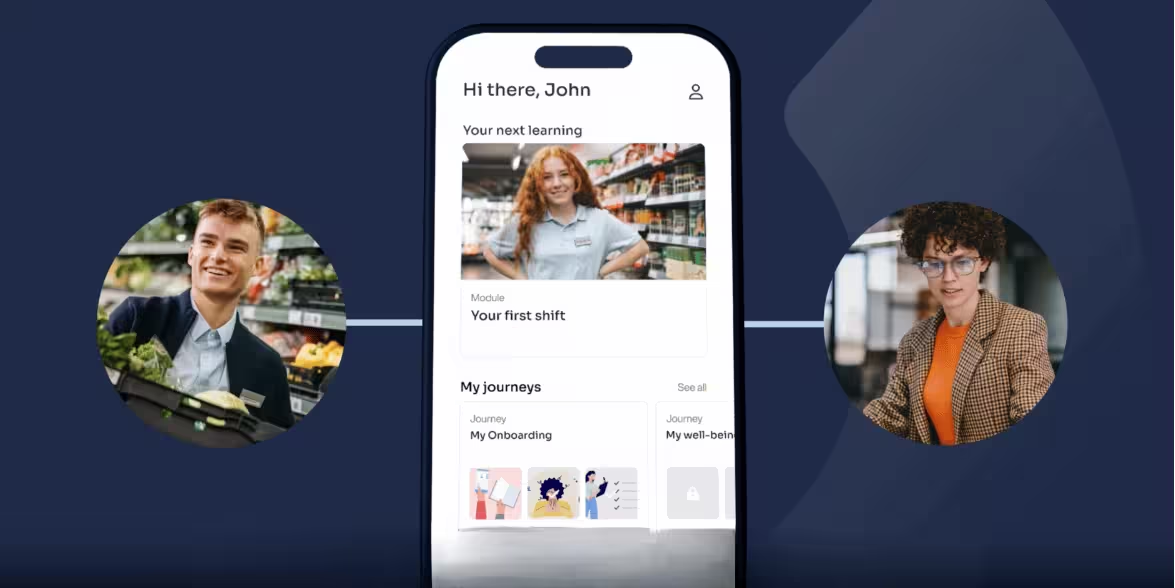
Learningbank takes a learning-led approach to workforce enablement, with a strong focus on frontline capability and readiness.
Learning: Its core learning environment supports onboarding, learning journeys, mobile access, blended learning, skills, compliance, and ready-made content.
Engagement: Engagement here is mostly about participation in learning, knowledge sharing, and support at work. It goes less deeply into formal employee listening or sentiment.
Performance: Skills and manager follow-up extend the system beyond course completion. Managers can assess capability, coach employees, and connect development with workplace performance.
How it connects: Learningbank connects learning with skills, compliance, workplace knowledge, and manager support. The focus is on turning learning into practical capability.
Strengths
Strong learning, skills, compliance, mobile access, knowledge, and manager follow-up.
Weaknesses
Less depth in formal employee listening and traditional performance management.
Best for
Frontline enterprises and fast-growing organizations where learning, engagement, and performance are fragmented.
Pricing
Custom pricing. Its core learning environment can be extended with additional capabilities for manager support, knowledge, skills, and compliance.
6. Leapsome
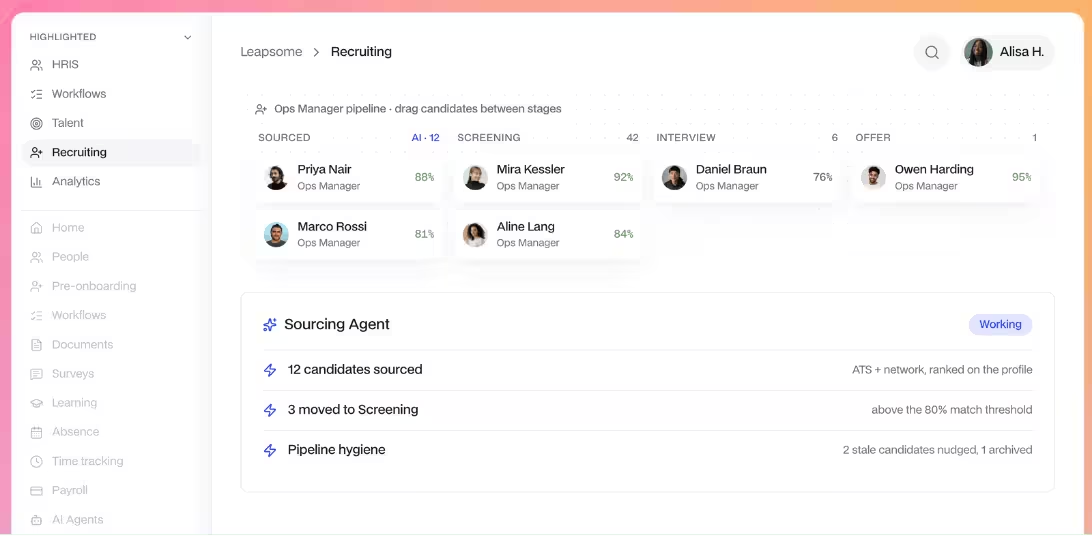
Leapsome brings learning, engagement, performance, goals, and competencies together within a broader talent system.
Learning: Learning supports onboarding, development, compliance, structured paths, and internal content. Learning activity can also connect with competencies and development requirements. It runs as a module alongside the core talent system rather than as the connective layer.
Engagement: Engagement surveys, feedback, and employee insight sit alongside its wider talent capabilities.
Performance: Reviews, goals and OKRs, competencies, feedback, calibration, 1:1s, and development form a substantial part of the system.
How it connects: Learning, goals, surveys, competencies, and reviews share employee data. That means a development need identified through performance or feedback can feed into learning.
Strengths
Broad connection between engagement, goals, competencies, performance, and people data, with learning available as a module.
Weaknesses
Designed primarily for knowledge-work organizations, so shared devices, offline working, and operational task execution are less central.
Best for
Scale-ups and mid-sized knowledge-work organizations wanting connected learning, engagement, talent, and performance.
Pricing
Flexible pricing starting from $3/user/month. Final pricing depends on workforce size, selected modules, and contract requirements.
7. Mitti
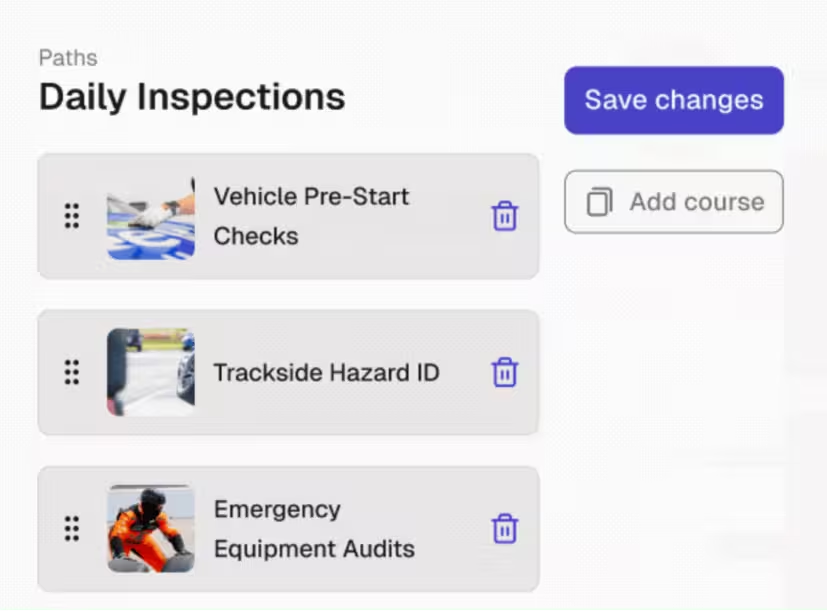
Mitti takes an operations-led approach to workforce enablement, combining training with inspections, tasks, communications, and frontline operations.
Learning: Training supports onboarding, bite-sized learning, AI course creation, certificates, practical assessments, and assignments by role, team, or location.
Engagement: Leaderboards, achievements, discussions, and targeted communications help keep frontline teams informed and involved.
Performance: Inspections, tasks, training data, and analytics give managers visibility into operational standards and where teams need support.
How it connects: Training sits alongside operational activity, so issues or inspections can surface knowledge gaps and inform follow-up learning.
Strengths
Strong connection between frontline training, communications, inspections, tasks, compliance, and operational performance.
Weaknesses
It focuses on frontline operations rather than traditional talent management, formal performance reviews, or career development.
Best for
Distributed and multi-site workforces where training must connect directly to compliance, operational standards, and day-to-day execution.
Pricing
Free for up to 10 users. Premium is $24/seat/month when billed annually or $29 monthly. Enterprise pricing is custom.
8. 360Learning
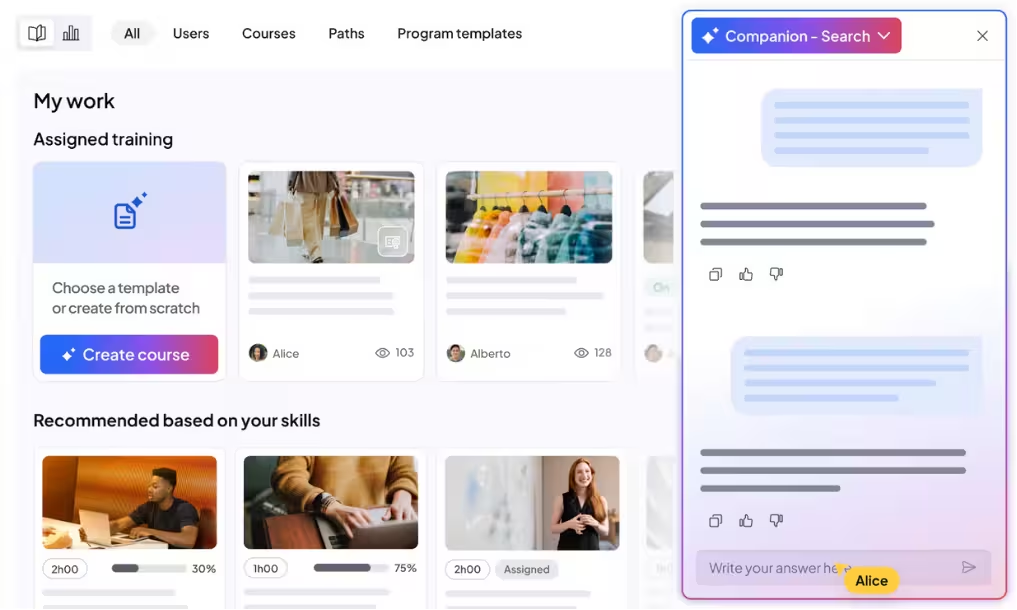
360Learning takes a collaborative, learning-led approach to workforce enablement, with a focus on skills, internal expertise, and frontline learning.
Learning: The platform supports onboarding, compliance, upskilling, AI-powered authoring, skills-based learning, and mobile or offline access.
Engagement: Forums, reactions, learner feedback, achievements, peer learning, and expert-led content creation encourage active participation.
Performance: Skills profiles, manager validation, video assessments, and coaching provide visibility into capability and development.
How it connects: Learning needs, internal expertise, skills, and feedback feed into course creation and ongoing development.
Strengths
Strong collaborative learning, AI authoring, internal knowledge sharing, skills development, mobile learning, and frontline coaching.
Weaknesses
Performance is centered on skills, coaching, and learning outcomes rather than traditional performance management. It also has less emphasis on employee listening or frontline operational execution.
Best for
Distributed and frontline organizations that want to scale internal expertise, accelerate course creation, and connect learning more closely with skills and coaching.
Pricing
Team Plan is $8/user/month for up to 100 users. Business and Enterprise plans use custom pricing.
9. Schoox
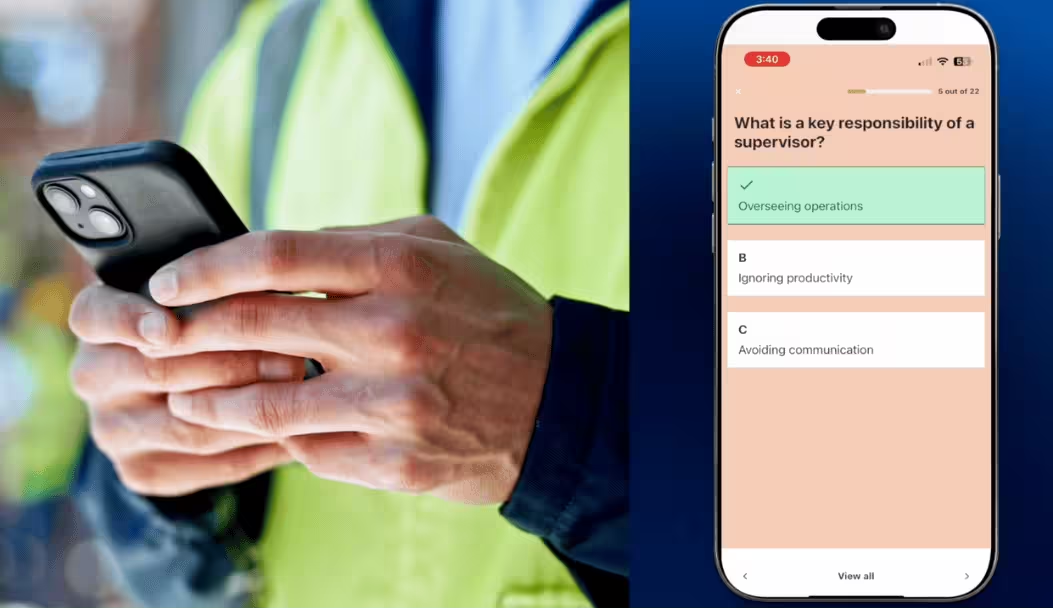
Schoox takes a learning-led approach to workforce enablement, connecting frontline learning, skills, engagement, and business performance.
Learning: Schoox supports onboarding, compliance, microlearning, mobile learning, on-the-job training, skills development, and personalized learning paths.
Engagement: Social learning, messaging, gamification, recognition, surveys, and career development features support participation.
Performance: Skills, goals, performance reviews, and business-impact reporting help connect development with workforce and business outcomes.
How it connects: Skills link business goals with learning, helping organizations identify capability gaps and target development accordingly.
Strengths
Strong frontline learning, skills, personalization, engagement, and connection between learning and measurable business performance.
Weaknesses
More learning-led than operations-led, so it is less suited where the main requirement is running frontline tasks, audits, or scheduling rather than building workforce capability.
Best for
Frontline and multi-site enterprises where learning, skills, engagement, and workforce performance need to connect more closely.
Pricing
Custom annual subscription based on active learner count and platform tier.
10. Thrive
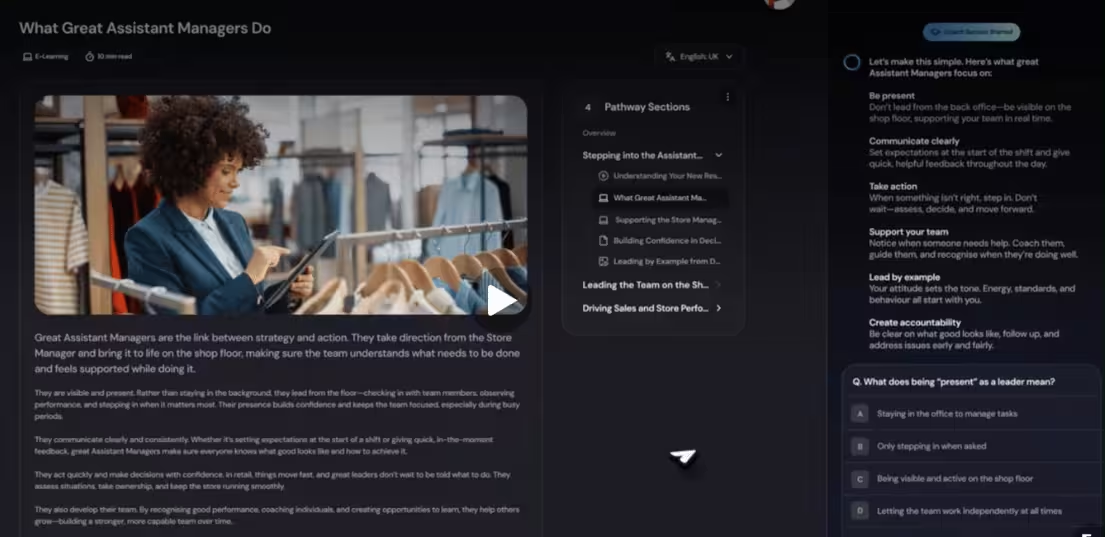
Thrive takes a learning-led approach to workforce enablement, connecting learning with skills, knowledge, mentoring, and workplace performance.
Learning: Learning is the core strength. Thrive combines LMS functionality with pathways, skills, social learning, and mentoring. It also adds AI content creation, knowledge, and analytics.
Engagement: Social feeds, communities, communications, mentoring, and user-generated content support participation and knowledge sharing. Engagement is focused more on learning and community than formal employee listening.
Performance: Skills, mentoring, assessments, workplace activity, and development connect learning more closely with practical performance.
How it connects: Learning, skills, mentoring, knowledge, and workplace resources sit in one environment. The focus is on building capability, not just completing courses.
Strengths
Deep learning functionality, skills, knowledge, mentoring, AI, and links between learning and workplace performance.
Weaknesses
Formal employee listening and traditional performance-review processes are less central.
Best for
Organizations modernizing an LMS and wanting learning to connect more closely with skills, knowledge, and performance.
Pricing
Uses a live pricing calculator based on learner numbers and selected products rather than a single universal per-user price.
11. WorkJam
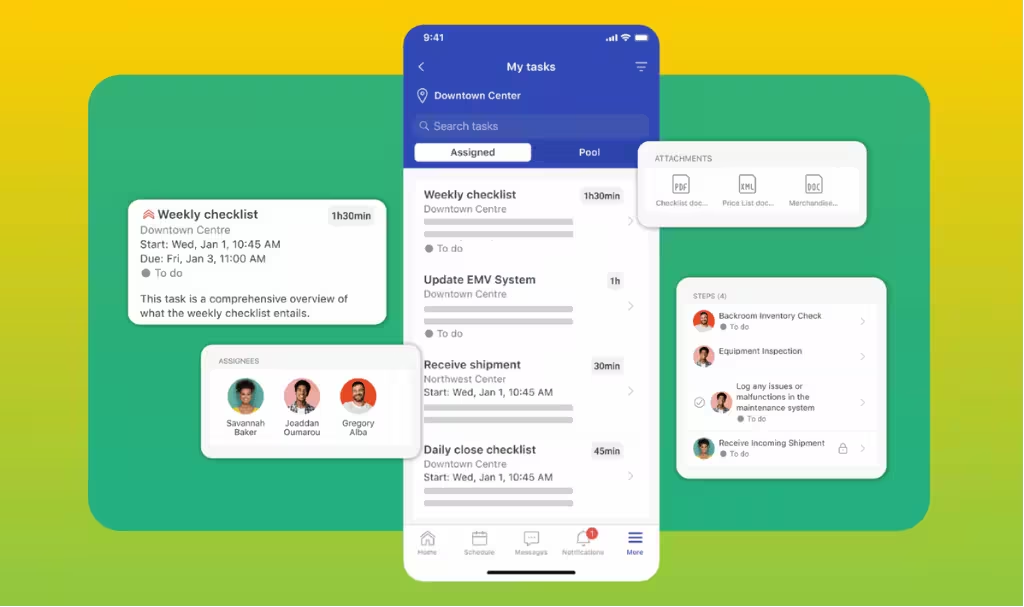
WorkJam brings learning closer to frontline operations, communications, and workforce management.
Learning: Learning and knowledge capabilities support onboarding, certifications, assessments, pathways, and role-based training.
Engagement: Targeted communications, messaging, recognition, surveys, polls, and channels help organizations communicate with and gather feedback from distributed teams.
Performance: Performance is primarily operational. Tasks, audits, skills, compliance, scheduling, and execution give managers visibility into whether work is being completed consistently.
How it connects: Learning, communications, tasks, audits, knowledge, and scheduling sit in the same frontline environment. That keeps training closer to the work employees actually need to do.
Strengths
Strong connection between frontline learning, communications, employee feedback, tasks, audits, and scheduling.
Weaknesses
Less suited to traditional talent management, career frameworks, and office-based performance reviews.
Best for
Large retail, hospitality, logistics, manufacturing, and other distributed frontline workforces.
Pricing
Frontline Connect Essential starts at $799/month for up to 500 users. Operations Elite starts at $1,599/month, with learning and additional operational capabilities available as paid add-ons.
12. YOOBIC
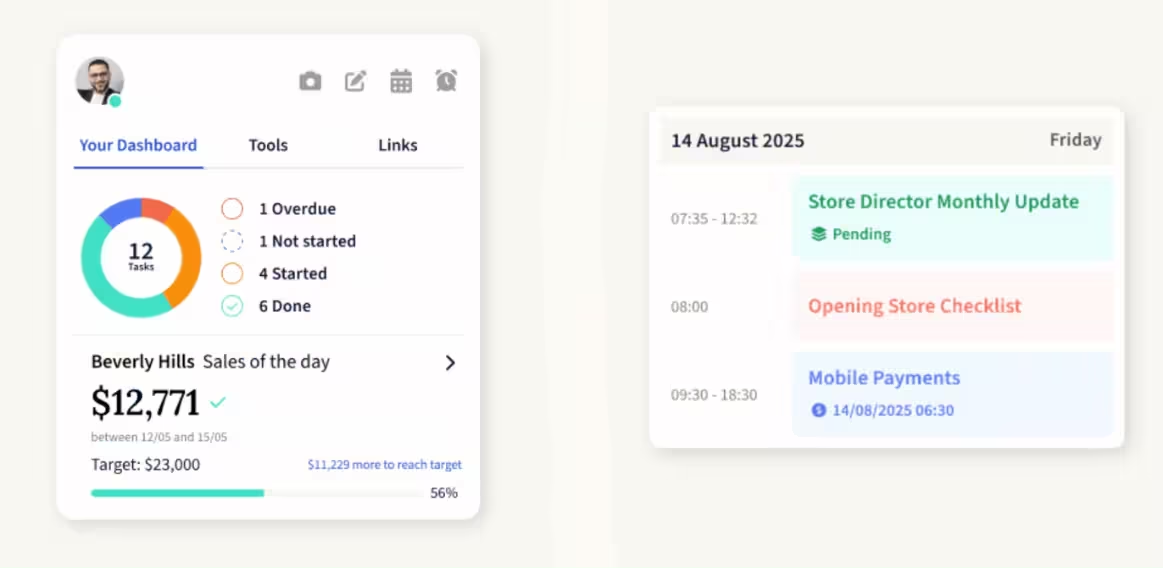
YOOBIC approaches workforce enablement through frontline learning, communications, and operational execution.
Learning: Mobile learning supports onboarding, training, and workplace knowledge for frontline employees.
Engagement: Communications and community tools help organizations reach distributed teams, share updates, and support employee participation.
Performance: Task management, audits, store execution, and analytics provide visibility into operational performance across sites and locations.
How it connects: Learning, communications, and task execution sit within the same frontline environment. Teams can communicate a new process, train people on it, and turn it into action without switching systems.
Strengths
Strong frontline specialization combining learning, communications, tasks, and operational execution.
Weaknesses
Less depth in traditional performance management, career planning, and employee listening.
Best for
Retail, hospitality, restaurants, and other multi-location frontline organizations.
Pricing
Custom pricing based on users or business locations and the modules selected.
How to choose the right workforce enablement system
There’s little value in comparing systems until you’re clear on the problem.
Start with what you need to solve and how your existing setup affects the decision.
- Compliance and readiness: Prioritize accessibility, learning depth, certification, readiness, and operational visibility.
- Learning is the main requirement: Ask whether you need a workforce enablement system or simply a better LMS.
- Rapid growth: Look closely at onboarding, performance, engagement, and manager support. How do those areas connect?
- Existing specialist tools: Integration may matter more than replacing everything.
- Fragmented learning, engagement, and performance: Test what changes when those signals can work together.
Ask every vendor what happens next. If the system identifies a performance gap, what does it do with that signal? The answer tells you more than another feature checklist.
Where Confirm fits
Confirm is a strong fit when the problem crosses learning, engagement, and performance.
For frontline organizations, that can mean connecting learning and compliance with employee feedback, retention signals, and performance.
For scale-ups, it can mean reducing fragmentation across onboarding, learning, and performance as the organization grows.
But that does not make Confirm the right choice for every shortlist.
If the requirement is deliberately narrow, a specialist system may be more appropriate. An organization that only needs employee surveys might prefer deeper employee-listening specialization. And a business primarily concerned with frontline task execution may prioritize a more operations-led product.
Choose the system that most closely matches the workforce problem you need to solve, not the one with the longest feature list.
Best fit systems by industry and function
Different industries create different workforce challenges. What matters most depends on how and where people work.
We’ve identified typical traits and priorities that shape what to look for in a system.
Retail and hospitality
Retail and hospitality workforces typically need:
- Fast onboarding
- Mobile access
- Compliance
- Multi-site consistency
- Communications and manager visibility
Learning that requires employees to regularly step away from the work they are being trained to do adds little value.
Our frontline research found that 73% of respondents said accessing training or information always or often disrupted employees’ ability to perform their core tasks.
That makes Axonify, Confirm, Learningbank, Mitti, Schoox, WorkJam, and YOOBIC particularly relevant. Each is designed for frontline or distributed workforces.
Manufacturing and logistics
Capability and compliance are closely connected in manufacturing and logistics.
Organizations need to show that:
- Training has been delivered
- Employees remain certified
- Changing procedures are understood
- People are ready to perform safety-critical work
Location, role, shift, certification, and manager-level reporting therefore matter more than consumer-style learning discovery.
That makes Confirm, Learningbank, Mitti, Schoox, Thrive, and WorkJam particularly relevant. Each has strengths across structured learning, compliance, skills, certification, or frontline readiness.
Fast-growing scale-ups
For scale-ups, the issue is often fragmentation, not frontline access.
Onboarding slows. Manager practices drift. Then growth starts outrunning the systems meant to support it.
Our scale-up research found that enablement challenges begin affecting workforce performance earlier than many organizations expect, with 97% of respondents reporting an impact before reaching 1,000 employees.
For fast-growing scale-ups, Confirm, Leapsome, Culture Amp, Lattice, and 360Learning all bring relevant strengths across onboarding, development, engagement, performance, and skills.
Compliance-led organizations
If compliance is central to the requirement, start there.
Look at automated assignments, certification, recertification, permissions, evidence, and audit trails. Then check reporting, content standards, and how quickly managers can spot gaps.
Don’t assume an employee development feature can replace a compliance LMS. If certification, recertification, evidence, and auditability matter, test them as requirements in their own right.
Where compliance is a major requirement, Confirm, Learningbank, Mitti, Schoox, Thrive, and 360Learning are all options to consider.
Performance and talent transformation
Sometimes workforce enablement is a performance problem. The gaps can be obvious: unclear goals, inconsistent reviews, or weak development conversations.
Culture Amp, Lattice, Leapsome, Confirm, and Schoox all bring relevant strengths where performance, development, and capability are the main priorities.
The key question is what happens after a performance gap is identified.
If the answer involves learning, skills, coaching, employee feedback, or all four, the connections between those capabilities become increasingly important.
See how Confirm connects learning, engagement, and performance.

Further information
Keep exploring workforce enablement:
- The complete guide to workforce enablement
- Workforce enablement – everything you need to know
- WES vs. LMS: what’s actually different
- WES vs. LXP: why content discovery isn’t job readiness
- The Frontline Enablement Gap report
- The Scale-Up Enablement Gap report
Workforce enablement system FAQs
What is the best workforce enablement system?
No single system is best for every workforce.
Frontline organizations are more likely to prioritize mobile access, compliance, operational execution, multi-site visibility, and learning in the flow of work.
Scale-ups and knowledge-work organizations may place greater emphasis on onboarding, employee engagement, performance management, development, goals, and manager effectiveness.
The best system is therefore the one that matches your workforce and the specific readiness gaps you need to close.
What is the difference between workforce enablement and workforce management software?
Workforce management software usually focuses on operational processes such as scheduling, labor planning, time and attendance, and workforce administration.
Workforce enablement focuses on whether employees have the knowledge, skills, support, motivation, and clarity needed to perform effectively.
The two increasingly overlap, particularly in frontline technology.
Can a workforce enablement system replace an LMS?
It can if its learning capabilities meet your organization’s requirements.
Organizations with complex compliance, certification, content, assessment, or learning administration requirements should evaluate the learning component just as rigorously as they would a standalone LMS.
A broad workforce proposition is not a substitute for learning depth if learning is business-critical.
What features should a workforce enablement system include?
The answer depends on your workforce. Start with learning and capability, engagement, performance, skills, compliance, reporting, AI, integrations, mobile access, and manager tools.
More important than the number of features is how effectively information moves between them.
What is the difference between employee enablement and workforce enablement?
The terms are sometimes used interchangeably.
Employee enablement often focuses on giving an individual employee the tools, knowledge, resources, and support required to work effectively.
Workforce enablement takes a wider view. It looks at how capability, engagement, performance, systems, and workforce data come together across teams and locations.
How much do workforce enablement systems cost?
Pricing varies substantially.
Some vendors publish per-user or per-seat pricing, while others calculate cost according to workforce size, locations, modules, implementation requirements, or contract length.
Compare total cost across the capabilities you need. A lower subscription price means less if you still need several other systems to cover the gaps.
Ready to close the workforce enablement gap?
The systems in this guide start from different places. Some lead with learning. Others with performance, employee experience, or frontline execution.
The best fit is the one that matches the gaps already affecting your workforce.
Before building your shortlist, understand those gaps.
Discover more on the workforce pressures shaping readiness in 2026.
Explore our latest benchmarking report.

Or, if disconnected learning, engagement, and performance systems are already part of the problem, we can help.
See what changes when learning, engagement, and performance work together.
