The uncomfortable truth about frontline workforce enablement
7 min read

Frontline organizations are investing in training, performance and employee support, but new research shows a growing gap between what’s in place and how ready people are to perform. So where is the workforce enablement gap showing up – and what are the consequences?
On paper, you’re doing the right things. You’ve put training in place. People are completing it. The dashboard looks healthy.
Then the shift starts.
A new hire is still checking the basics weeks into the job. You get pulled away to answer the same question again. One of your sites has quietly started doing things its own way.
One of those moments is manageable. Repeat it across hundreds of employees and multiple locations, and it’s a different story.
76%
of leaders say employees not being fully job-ready creates high operational risk across their locations.

The problem often isn’t a lack of systems or processes. In many organizations, they’re already there. The gap appears when they don’t connect around the person trying to do the job.
Where readiness gaps become operational risk
If you run a frontline workforce, you’ll recognize what happens when someone isn’t quite ready. They lean on colleagues more than they should, straightforward tasks take longer and small mistakes need fixing before they spread.
As those small interventions start to affect productivity, completion stops being the most useful measure. Readiness tells you what you really need to know: can your people do the job?
Completion can tell you someone attended the training, finished an onboarding pathway or passed an assessment. Readiness asks what happens afterwards:
- Can they apply what they’ve learned?
- Can they make the right decisions?
- Can they perform confidently when the pressure is on?
On the frontline, there isn’t much distance between someone needing extra support and the operation feeling the effect. Slow ramp-up to productivity is one of the clearest places this shows up. 72% of frontline leaders say new employees take more than four weeks to reach full productivity, with almost one in five saying it takes more than two months. Every extra week spent getting someone up to speed has consequences elsewhere. Managers step in. Experienced staff pick up the slack. Productivity takes the hit.
Getting people ready means thinking beyond the course itself and looking at the support they have while the work is happening.
Bringing learning into the flow of work
You can’t pause frontline operations every time someone needs an answer. People still need to learn, but the operation rarely gives them much time to do it. Customers need to be served, production keeps moving, and busy periods don’t make room for someone to stop and check a process.
So the way people access learning and support matters.
73%
of frontline leaders say accessing training or information disrupts employees’ ability to perform their core tasks.

If finding an answer means stepping away from the job and searching through another system, learning creates friction at the exact moment someone needs help. And when that disruption becomes routine, the consequences get much bigger: among organizations where accessing training always disrupts core tasks, 80% say performance or training gaps very often create compliance risks or operational failures. Where disruption happens only sometimes, that falls to just 6%.
Formal training still has an important role. Some skills need dedicated time, while certain compliance requirements call for structured learning and assessment. But people also need support once the course is over.
Think about the new hire who encounters something their onboarding didn’t quite prepare them for, or the experienced employee checking a process that changed three months ago. These are the everyday moments where learning meets performance.
Bringing learning into the flow of work makes support easier to reach and gives managers practical ways to reinforce what matters, without continually pulling people away from what they’re doing.
The less friction there is between learning and the work itself, the easier it becomes to turn knowledge into consistent performance.
Why disconnected systems limit workforce visibility
You probably already have most of the data. The problem is that it lives in different places.
Learning data tells you what someone has completed, while performance information shows how they’re doing once they’re on the job. Engagement can help explain where people are struggling, and compliance data shows you where those gaps carry greater risk.
That fragmentation creates its own friction. System complexity is one of the biggest barriers to effective frontline training and performance, cited by 46% of leaders. When those signals live in separate systems, someone still has to piece the story together.
And it gets harder as your workforce grows. If one location starts underperforming, you might see the outcome quickly. Working out why it’s happening can take much longer.
It could be a knowledge gap or inconsistent manager support. Or the issue may have very little to do with training at all. Without a connected view, you’re left guessing – and it’s easy to spend time treating the symptom rather than understanding what’s driving it.
3.5x
Organizations with a totally unified view of workforce performance are three times more likely to report very consistent performance during peak or seasonal periods than those with only a partial view.

The answer isn’t another dashboard for the sake of it. You need enough visibility to spot the connections, understand where support is needed and decide what to do next.
Visibility earns its place when it leads to action.
The shift to workforce enablement
Put those pieces together and the wider problem becomes clear.
For years, learning, engagement, performance and compliance have been managed separately – with different teams, systems and measures behind each one. Your employees don’t experience their working day in those categories. They’re trying to do a job well, with the knowledge, capability, feedback and support they need to make that possible.
As a leader, you need a clear view to understand where people are performing well, where they’re struggling, and what would help.
Workforce enablement connects the dots between learning, engagement, performance and compliance, giving you a clearer view of what your people can do, where they’re getting stuck and where to act. We call it the Talent Flywheel, with each part feeding the next. Once you can see the gap, you can respond to the right problem.
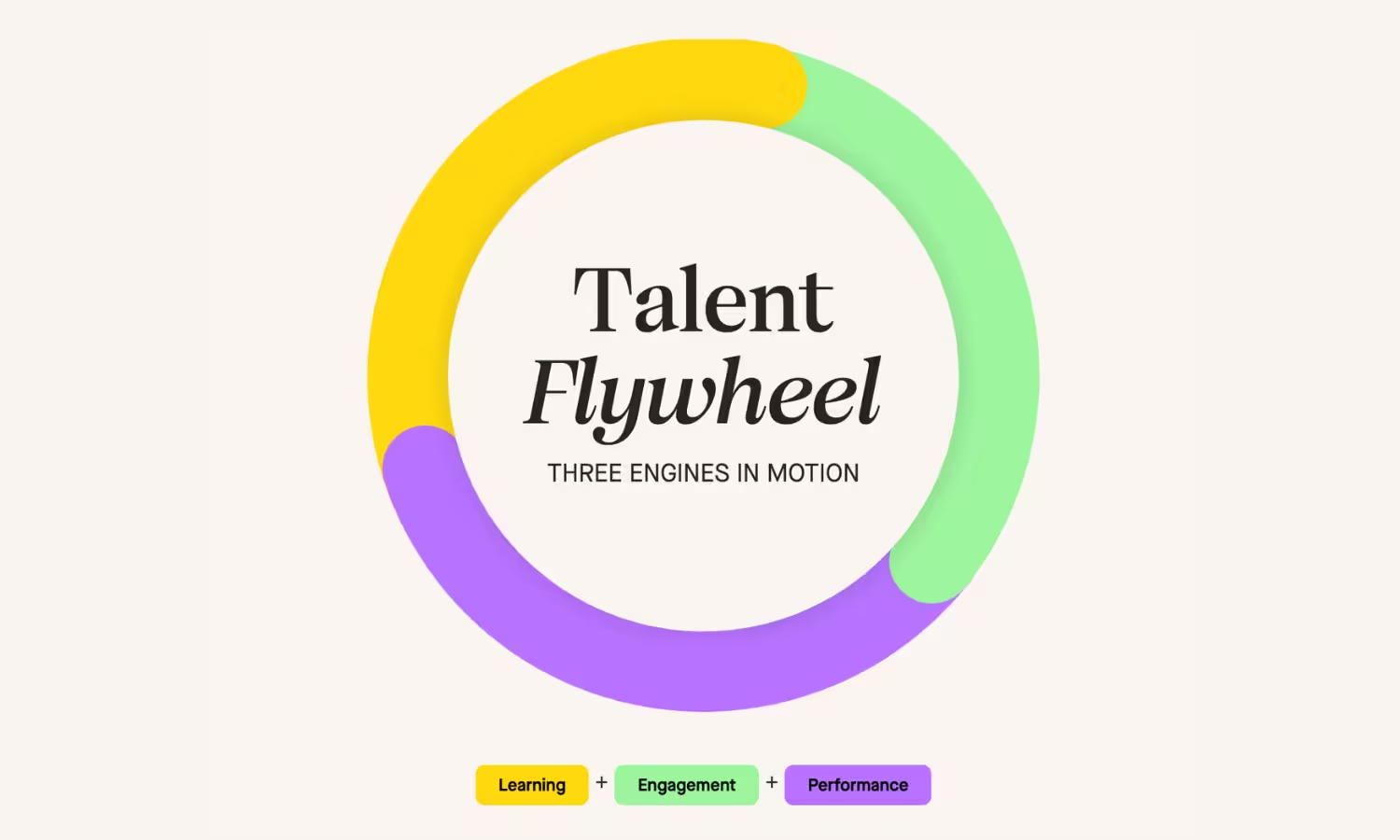
It could be that an onboarding pathway needs changing because people are finishing it but still don’t feel confident in the role. A manager might need better insight into where their team needs support. Employees may simply need easier access to the right guidance during the working day.
The right action depends on the problem. What matters is being able to see the connection between the support you provide and what happens next. When learning and performance sit apart, it’s surprisingly easy to optimize the activity while missing the outcome.
Workforce enablement brings the focus back to what you ultimately need from your people: the capability to perform today and adapt as the work changes.
A closer look at frontline workforce enablement
We commissioned a new benchmark report to understand how these challenges are playing out across frontline organizations.
The research covers 400 enterprise organizations in the UK and US, exploring what’s getting in the way of workforce performance – from readiness and onboarding to learning in the flow of work, consistency across locations and workforce visibility.
The full report uncovers more key findings, but one tension comes through clearly.
You can have the training, systems and processes in place and still have a gap between what your people have been given and what they’re ready to do. Closing it means seeing capability more clearly, spotting problems earlier and giving people support where the work happens.
A healthy dashboard tells you the activity is happening. What matters is what happens when the shift starts.
Access the full report
Uncover the stats behind the frontline readiness gap, and where operations are feeling it most.

Related resources
- The complete guide to workforce enablement
- The talent flywheel: The end of learning in isolation
- 3 reasons the HRBP won’t survive the next decade
- Exposing the scale-up workforce enablement gap
- The frontline enablement gap report
- The scale-up enablement gap report
- The HRBP won’t survive the next decade whitepaper
- The 12 best workforce enablement systems and platforms in 2026